How I Navigated My First Investment Cycle While Planning a Wedding
Planning a wedding is exciting, but it can seriously shake your finances. When I started, I had no clue how to balance dream venues with future savings. That’s when I discovered the investment cycle—and how it quietly works behind big life moments. It’s not about getting rich fast; it’s about making your money move with purpose. I learned that every dollar saved could either sit idle or be put to work in a thoughtful, structured way. This shift in thinking helped me see my wedding not just as an expense, but as a milestone that could coexist with financial responsibility. Here’s how I learned to grow savings without sacrificing the celebration I wanted—without falling into common money traps or emotional decisions that derail long-term goals.
The Moment I Realized I Needed More Than a Budget
At first, I thought careful budgeting would be enough. I tracked every sample cake tasting, compared floral quotes, and negotiated linen rentals. But no matter how much I trimmed, the total kept rising. What I didn’t realize was that while I was focusing on spending less, I was ignoring what my savings were actually doing. Most of my money was sitting in a standard savings account, earning barely any interest—less than the rate of inflation. That meant its value was quietly shrinking over time. It wasn’t just stagnant; it was losing ground.
This realization hit me during a conversation with my older sister, who had recently bought a home. She mentioned casually that she hadn’t just saved for her down payment—she’d invested part of it. “My money was working while I was working,” she said. That phrase stuck with me. I began reading about how people grow wealth not just by earning more or spending less, but by letting their money generate returns over time. That’s when I first encountered the concept of the investment cycle: the idea that money moves through predictable phases based on time, goals, and risk tolerance.
For someone like me—planning a major life event with a fixed date—the investment cycle wasn’t just theoretical. It was practical. Instead of seeing my wedding fund as a black hole for cash, I started to view it as a short- to medium-term financial goal with its own timeline and strategy. I began to ask different questions: How long do I have before the wedding? What kind of return could I reasonably expect? What level of risk could I afford to take without jeopardizing the event? These weren’t Wall Street concerns—they were personal, grounded in real life. The shift wasn’t about becoming a trader; it was about becoming intentional.
What surprised me most was how empowering this mindset felt. I wasn’t trying to beat the market or double my savings overnight. I was trying to protect what I had and let it grow in a way that matched my reality. That clarity gave me confidence. I stopped feeling guilty about spending on the wedding and started feeling proud of how I was managing my money. Budgeting was still important, but it was no longer the only tool in my financial toolkit. The investment cycle became my framework for balancing present joy with future security.
What Exactly Is an Investment Cycle (And Why It Matters for Life Goals)
An investment cycle is not a complex financial product or a secret strategy reserved for the wealthy. At its core, it’s a natural progression that money goes through when it’s managed with intention. Think of it like planting a garden: you prepare the soil, plant the seeds, nurture the growth, and eventually harvest. In financial terms, the cycle includes four key phases—accumulation, growth, rebalancing, and utilization. Each phase serves a purpose, and understanding them helped me align my money with my life timeline.
The first phase, accumulation, is about setting aside funds consistently. This is where most people start—automating transfers, cutting unnecessary expenses, and building momentum. For me, this began 18 months before the wedding. I committed to setting aside a fixed amount each month, treating it like a non-negotiable bill. The second phase, growth, is where investments begin to generate returns. This doesn’t mean chasing high-risk stocks; for short-term goals, growth often comes from stable, income-producing assets like short-term bonds or dividend-paying funds. Because I had a clear end date—the wedding—I focused on assets that had a track record of steady, predictable performance.
The third phase, rebalancing, is often overlooked but critical. Over time, some investments may grow faster than others, shifting your portfolio’s risk level. Rebalancing means adjusting your holdings to stay aligned with your original plan. For example, if one fund outperformed and now makes up too large a portion of your savings, you might sell a bit and reinvest in more stable options. I scheduled quarterly check-ins to review my progress and make small adjustments. This kept my strategy on track without reacting to daily market noise.
The final phase, utilization, is when you use the funds for their intended purpose—like paying for the wedding. By the time I reached this stage, I had moved most of my savings into low-volatility accounts to protect the principal. This ensured that no market dip in the final months would jeopardize my ability to cover essential costs. What made the investment cycle powerful was its structure. It didn’t promise miracles, but it provided a roadmap. Instead of feeling overwhelmed by choices, I had a clear sequence: save consistently, grow wisely, adjust periodically, and spend with confidence.
For life goals with fixed timelines—weddings, down payments, education expenses—the investment cycle is especially valuable. It prevents the common mistake of treating all savings the same. A retirement fund can afford more risk because it has decades to recover from downturns. A wedding fund cannot. By matching the cycle to the goal, I avoided taking on unnecessary risk and focused on what mattered: preserving and growing my money in a way that supported my life, not disrupted it.
Where I Went Wrong—And What I Learned
Even with a plan, I wasn’t immune to temptation. Early on, I came across an online forum where someone claimed they’d doubled their money in six months with a little-known cryptocurrency. The post was full of excitement and screenshots of rising charts. For a moment, I was tempted. My wedding was still over a year away—plenty of time, I thought. What if I could grow my fund faster and have even more to spend on the celebration?
I almost made the transfer. I had the app open, the amount entered, and my finger hovering over the confirm button. But something stopped me. I remembered a piece of advice from a financial article: “Never invest in something you don’t understand.” I couldn’t explain how the asset worked, what drove its value, or what would happen if it dropped. I didn’t know who regulated it or how to get my money out quickly if needed. That uncertainty was a red flag.
I stepped back and reviewed my timeline. My wedding was important, but it wasn’t a gamble. I realized that chasing high returns wasn’t about smart investing—it was about emotion. Fear of missing out, excitement, and impatience were clouding my judgment. That moment of hesitation saved me from a potential disaster. A few weeks later, I saw news that the same asset had lost 60% of its value in days. I felt a wave of relief. I hadn’t lost money, but I had learned a crucial lesson: emotional decisions break investment cycles.
From then on, I made discipline my priority. I accepted that slow, steady growth wasn’t boring—it was responsible. I focused on investments with transparency, clear fee structures, and historical stability. I also defined my risk tolerance honestly: I wasn’t willing to risk more than 5% of my principal for the chance of higher returns. This wasn’t about being overly cautious; it was about respecting my goal. Protecting my savings became just as important as growing them. In fact, for short-term goals, capital preservation is often more critical than aggressive growth.
This experience reshaped my entire approach. I stopped looking for shortcuts and started valuing consistency. I learned to differentiate between speculation and investment. One is driven by hope and hype; the other by planning and patience. By anchoring my decisions to my timeline and risk tolerance, I avoided the trap so many fall into—sacrificing long-term security for the illusion of quick gains. That near-mistake didn’t derail me; it strengthened my resolve to stay the course.
Building a Wedding-Proof Investment Strategy
With my lessons in hand, I rebuilt my strategy from the ground up. I divided the 18 months before the wedding into three distinct phases, each with its own financial focus. The first phase, from 12 to 18 months out, was about stable accumulation. I chose low-cost index funds and short-term bond ETFs that offered modest but reliable returns. These weren’t flashy, but they had a history of steady performance and low volatility. I set up automatic transfers so that every payday, a portion went directly into this growth bucket. This removed emotion from the process and ensured consistency.
The second phase, from 6 to 12 months out, shifted toward preservation and small growth. By this point, I had built a solid base, and my priority was to protect it. I began reducing exposure to any asset with high volatility and increased allocations to money market funds and high-yield savings accounts. These options offered slightly lower returns but came with much lower risk. I also started setting aside specific amounts for major vendors—like the venue and photographer—so I wouldn’t have to liquidate investments at the last minute.
The final phase, under 6 months, was all about capital protection. At this stage, I moved nearly all remaining funds into FDIC-insured accounts or short-term CDs with predictable maturity dates. This ensured that every dollar I needed for the wedding was safe from market swings. I treated each phase like a checkpoint, reviewing my progress and adjusting as needed. If I received a bonus or gift, I allocated it according to the current phase—never jumping ahead or taking on extra risk.
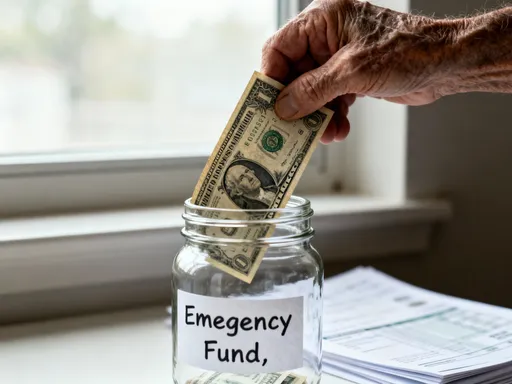
Another key part of my strategy was separation. I created three distinct accounts: one for wedding savings, one for emergency funds, and one for long-term goals like retirement. This prevented me from dipping into the wrong pot when unexpected expenses came up—like a sudden flight for a family member or a last-minute dress alteration. By keeping these funds separate, I maintained clarity and control. I also set a rule: no wedding-related expense could touch the emergency fund, no matter how urgent it seemed.
This phased, disciplined approach gave me peace of mind. I wasn’t reacting to market headlines or vendor pressure. I was following a plan tailored to my timeline. When inflation caused some wedding costs to rise, I had built in a 10% buffer to absorb the increase. When my cousin offered a great deal on floral arrangements, I could say yes without guilt because I knew my finances were on track. Structure didn’t limit my choices—it expanded them by giving me confidence.
Tools That Actually Helped—No Hype, Just Results
In a world full of flashy finance apps and “get rich quick” promises, I learned to value simplicity and transparency. I avoided platforms that used complex jargon or promised guaranteed returns. Instead, I focused on tools that were easy to understand, had clear fee disclosures, and supported my phased strategy. One of the most helpful was a robo-advisor with a goal-based investing feature. I input my wedding date, target amount, and risk level, and it recommended a portfolio that automatically adjusted as I got closer to the event. It rebalanced quarterly and sent gentle reminders to review my progress.
Another useful tool was a budgeting app that synced with my bank accounts and categorized spending. While it didn’t manage investments, it helped me see where my money was going and freed up extra cash to put toward my fund. I also appreciated features like automated savings rules—“round up” purchases and transfer the difference—which added small amounts consistently without effort. Over time, these micro-contributions added up.
But the most valuable tool wasn’t digital at all. It was a shared spreadsheet I created with my partner. We listed every expected expense, tracked actual spending, and updated our investment balances monthly. It had no algorithms, no ads, no automation—just honesty. We reviewed it together every Sunday morning with coffee. That ritual kept us aligned, reduced stress, and made financial decisions feel like a team effort. It also helped us celebrate small wins, like when we hit 50% of our savings goal.
I also leaned on educational resources from reputable financial institutions. Many offer free guides on goal-based investing, risk assessment, and portfolio construction. I read them slowly, took notes, and applied only what made sense for my situation. I avoided influencers or YouTube gurus whose advice seemed too good to be true. Instead, I looked for consistency—principles that appeared across multiple trusted sources. Clarity, not complexity, became my benchmark. If I couldn’t explain an investment to a friend in simple terms, I didn’t use it.
How Risk Management Saved My Savings
Risk management wasn’t an afterthought—it was the foundation of my strategy. I started by defining what I could afford to lose. The answer? Almost nothing. Since the wedding was a near-term goal, I couldn’t rely on time to recover from losses. That meant my primary objective was capital preservation, not market-beating returns. I accepted that earning 3–4% annually was better than risking a 20% loss for the chance of 8–10%.
To protect against the unexpected, I built in multiple layers of security. First, I added a 10% cushion to my total budget to account for price increases or last-minute additions. This buffer came from gradual savings, not borrowing or dipping into emergency funds. Second, I maintained a strict separation between wedding money and emergency savings. That fund stayed untouched, no matter the temptation. Third, I reviewed my investment plan every three months, not to chase performance, but to ensure alignment with my timeline and life changes.
When the stock market experienced a downturn six months before the wedding, I didn’t panic. I checked my current phase and confirmed that most of my funds were already in low-volatility accounts. The small portion still in growth assets had time to recover, and I didn’t need to sell at a loss. This ability to stay calm came from preparation, not luck. I had a plan, and I trusted it.
Risk management also meant saying no. I turned down “opportunities” that didn’t fit my timeline. I avoided peer pressure to invest in trendy assets. I prioritized safety over speculation. This wasn’t fear—it was wisdom. I learned that the most powerful financial move isn’t always action; sometimes, it’s restraint. By protecting my savings, I ensured that the wedding wasn’t funded by stress or debt, but by thoughtful, disciplined choices.
What I’d Do Differently—And What Actually Worked
In hindsight, I wish I’d started earlier. The first six months of planning were spent catching up, and I missed out on potential growth by delaying my investment strategy. I also wish I’d asked more questions sooner—about fees, tax implications, and liquidity. But I’m proud of what I did right. I stuck to a plan that matched my timeline. I resisted emotional decisions. I protected my savings and still had the wedding I dreamed of.
The real victory wasn’t in the returns I earned—it was in the confidence I gained. Walking down the aisle, I wasn’t worried about my bank balance. I knew my finances were intact, my future was still on track, and I had made smart choices under pressure. The investment cycle didn’t make me rich, but it made me resilient. It taught me that financial peace isn’t about having the most money—it’s about having control.
For anyone facing a big life expense, my advice is simple: don’t just save—invest with purpose. Use the investment cycle to align your money with your goals. Focus on what you can control: your timeline, your risk level, your discipline. Avoid the noise. Trust the process. Because the best outcome isn’t just a beautiful wedding—it’s knowing you built it without breaking your financial foundation. And that kind of security? It lasts far longer than a single day.