How I Predicted the Market Shifts and Retired Early—Honest Lessons
What if you could see financial storms coming before they hit? I’m not talking about magic—I’ve been in the trenches, watching markets twist and turn, and learned the hard way how forecasting can protect—and grow—your wealth. This isn’t theory; it’s what helped me step away from the 9-to-5 grind earlier than most thought possible. Let me share how reading market signals changed my financial path, the traps I fell into, and what actually worked when real money was on the line. It wasn’t about getting rich overnight, but about staying rich when others lost ground. The key wasn’t perfection, but preparation.
The Wake-Up Call: Why Market Forecasting Matters for Early Retirement
In 2008, like millions of others, I watched my portfolio shrink without understanding why. At the time, I believed in the mantra: “Stay the course, time in the market beats timing the market.” And while there’s truth in that, I realized too late that “staying the course” during a 50% market collapse meant losing half of what I had worked decades to build. That year was my wake-up call. I began to question whether blind faith in long-term averages was enough, especially for someone dreaming of retiring before 60. The reality is, early retirement isn’t just about saving aggressively—it’s about protecting those savings from avoidable damage.
Market forecasting isn’t about predicting the exact day the S&P 500 will drop. It’s about recognizing when risk is rising and adjusting accordingly. For early retirees, whose portfolios must last 30 or 40 years, a major drawdown at the wrong time can be catastrophic. This is known as sequence-of-returns risk—if your first few years of retirement coincide with a bear market, even modest withdrawals can permanently erode your capital. I learned that forecasting isn’t a shortcut to wealth; it’s a survival tool. It allows you to shift from passive hope to active stewardship of your financial future.
My turning point came when I studied past market cycles. I noticed that downturns weren’t random. They followed patterns—rising inflation, tightening credit, overvalued assets, and excessive optimism. These weren’t hidden secrets; they were visible in economic data, market behavior, and investor sentiment. The problem wasn’t lack of information—it was lack of attention. Most people, myself included, were too focused on their monthly contributions and fund choices to notice the bigger picture. Once I started paying attention, I began to see the early warnings of the 2020 crash and the 2022 correction long before they fully unfolded. That awareness didn’t make me immune to volatility, but it gave me time to act.
Forecasting, when done responsibly, doesn’t replace discipline—it enhances it. It shifts your mindset from reactive to proactive. Instead of being shocked by a 20% drop, you’ve already considered the possibility and planned for it. You’ve built buffers, reduced risk where appropriate, and positioned your portfolio to withstand turbulence. For early retirement, this isn’t optional—it’s essential. The goal isn’t to avoid every dip, but to avoid the ones that could derail your timeline. That’s the real value of market foresight: not predicting the future, but preparing for it.
Reading the Signs: What Moves Markets (And How to Spot It)
Markets don’t move in a vacuum. They respond to real-world forces—economic data, central bank decisions, corporate earnings, and human psychology. The trick isn’t to follow every headline, but to identify the signals that truly matter. Think of it like driving: you don’t need to analyze every pebble on the road, but you do need to watch the traffic lights, weather conditions, and other drivers’ behavior. In investing, the same principle applies. The most powerful forecasts come not from complex algorithms, but from understanding a few key drivers that shape long-term trends.
One of the clearest signals is interest rates. When central banks begin raising rates, it’s usually a response to inflation or an overheating economy. Higher borrowing costs slow down business investment and consumer spending, which eventually affects corporate profits and stock valuations. I remember in 2022, when the Federal Reserve signaled aggressive rate hikes, many investors dismissed the risk, saying “this time is different.” But history shows that sustained rate increases almost always lead to market corrections. By paying attention to that signal, I reduced exposure to long-duration assets like growth stocks and high-multiple tech companies before their sharp decline.
Another critical indicator is valuation. When stock prices rise much faster than earnings, markets become stretched. Metrics like the cyclically adjusted price-to-earnings ratio (CAPE) can help spot these extremes. In 2021, the CAPE ratio for the S&P 500 reached levels not seen since the dot-com bubble. That didn’t mean the market would crash tomorrow, but it did mean that future returns were likely to be lower, and the risk of a correction was elevated. I didn’t sell everything, but I shifted more into value stocks and dividend-paying companies, which tend to hold up better in downturns.
Investor sentiment is another powerful signal. When everyone is optimistic, when financial news is all about “the next big thing,” and when even your neighbor is giving stock tips, it’s often a sign that the market is nearing a peak. Conversely, when fear dominates, and people are swearing off stocks forever, it’s often a buying opportunity. Tools like the CBOE Volatility Index (VIX) or surveys of investor sentiment can quantify this mood. I use these as contrarian indicators—not to make impulsive trades, but to check whether my own emotions are aligned with reality.
Sector rotation is another clue. As economic conditions change, different parts of the market perform better than others. For example, during inflationary periods, energy, materials, and real estate often outperform, while during recessions, consumer staples and healthcare tend to be more resilient. By watching which sectors are leading or lagging, you can get a sense of what the market expects. I don’t try to chase every rotation, but I do use this information to ensure my portfolio isn’t overly concentrated in areas that may underperform in the next phase of the cycle.
Building Your Forecasting Toolkit: Simple Methods That Actually Work
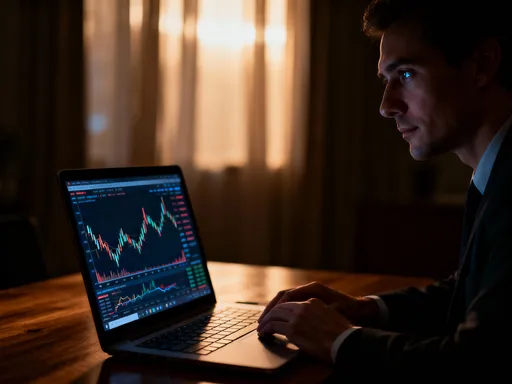
You don’t need a Bloomberg terminal or a PhD in economics to forecast market trends. What you do need is a consistent, disciplined approach to gathering and interpreting information. My toolkit is simple: I track a handful of leading economic indicators, monitor market valuations, observe investor sentiment, and review central bank communications. I don’t look at all of them every day—that leads to noise and overreaction. Instead, I review them monthly, treating it like a financial health check-up.
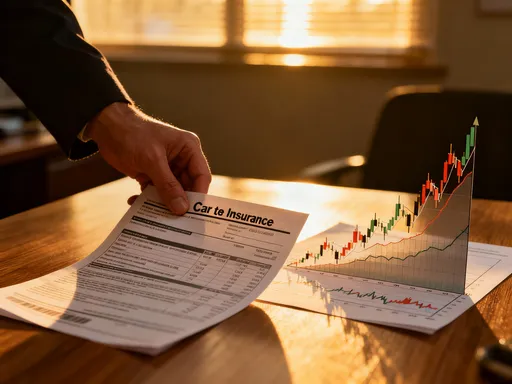
Leading indicators like the yield curve, jobless claims, and manufacturing surveys give early clues about the economy’s direction. The yield curve, for instance—the difference between long-term and short-term interest rates—has historically been a reliable recession predictor. When it inverts (short-term rates higher than long-term), it often signals that investors expect slower growth ahead. I don’t act on a single indicator, but when multiple signals point in the same direction, I take notice. In 2019, the yield curve inverted, job growth slowed, and manufacturing contracted. That cluster of warnings prompted me to increase my cash position and reduce leverage in my portfolio.
Valuation metrics are equally important. I regularly check the price-to-earnings ratio of the broad market, dividend yields, and price-to-book ratios across sectors. When valuations are high, I become more cautious about adding new money to equities. When they’re low, I look for opportunities to deploy cash. This isn’t market timing in the speculative sense—it’s asset allocation with awareness. I don’t try to sell at the top or buy at the bottom, but I do avoid overpaying for assets and seek value when it’s on sale.
Sentiment analysis is the third pillar. I read financial news, but not to follow the herd—to understand its mood. When headlines scream “BOOM!” and everyone is bullish, I get cautious. When the same outlets are predicting doom, I start looking for bargains. I also track the VIX and investor surveys. High VIX readings often coincide with market bottoms, while low readings can signal complacency. Again, I don’t trade on sentiment alone, but I use it to calibrate my own behavior. If I’m feeling greedy when others are greedy, I know it’s time to pause and reassess.
The final piece is central bank policy. The Federal Reserve, European Central Bank, and other major institutions have enormous influence over financial conditions. I read their meeting minutes, listen to their speeches, and watch for shifts in tone. When they move from “accommodative” to “hawkish,” it’s a signal to reduce risk. When they pivot back to support, it’s often a sign that conditions are stabilizing. This doesn’t mean I follow every rate decision with a trade, but it informs my longer-term positioning.
When to Act (And When to Stay Put): Timing and Discipline in Volatile Times
Forecasting is only valuable if it leads to sound decisions. But here’s the challenge: knowing when to act, and when to do nothing. Many investors fall into the trap of overreacting to every signal, turning a disciplined strategy into a series of impulsive trades. I’ve made that mistake. In 2015, I saw warning signs and moved too much into cash. The market dipped, but then recovered, and I missed out on gains. I learned that action must be measured, not emotional. It’s better to make small, incremental adjustments than dramatic shifts based on a single data point.
I now use predefined thresholds to guide my decisions. For example, if the CAPE ratio rises above a certain level, I stop adding new money to growth funds. If the yield curve inverts and other recession indicators confirm, I may reduce equity exposure by 10–15%, not 50%. These rules help me avoid panic and stay consistent. I also stagger my actions. Instead of selling all at once, I might trim positions over several months. This reduces the risk of mistiming the market while still reducing exposure to overvalued assets.
Another key principle is to focus on what you can control. I can’t control the stock market, but I can control my portfolio’s risk level, my spending in retirement, and my emotional response. During the 2020 crash, I didn’t try to predict the bottom. Instead, I ensured I had enough cash to cover several years of living expenses, so I wouldn’t be forced to sell stocks at a loss. That simple step gave me the freedom to stay calm while others were selling in fear.
Discipline also means knowing when to do nothing. Markets are noisy. A single bad jobs report doesn’t mean a recession is coming. A hot inflation number doesn’t guarantee rate hikes. I wait for confirmation—multiple signals aligning—before making changes. This patience has saved me from unnecessary trades and kept my long-term strategy intact. Forecasting isn’t about being right all the time; it’s about being right enough to avoid the worst outcomes.
Risk Control: Protecting Your Nest Egg Without Missing Gains
For early retirees, capital preservation isn’t conservative—it’s strategic. Once you stop working, your portfolio becomes your paycheck. Every dollar lost is a dollar you can’t afford to replace. That’s why risk control isn’t about avoiding risk entirely, but about managing it intelligently. Forecasting plays a crucial role here: it helps you anticipate periods of higher volatility and adjust your portfolio to reduce downside risk without abandoning growth potential.
One of the most effective tools is asset allocation. I don’t hold a static 60/40 portfolio. Instead, I adjust my stock-bond mix based on market conditions. When valuations are high and recession risks rise, I increase my bond and cash allocation. When markets are cheap and growth is recovering, I lean more into equities. This isn’t market timing in the speculative sense—it’s risk-aware allocation. The goal isn’t to maximize returns in every cycle, but to ensure the portfolio can last for decades.
Diversification is another layer of protection. I spread my investments across asset classes—U.S. and international stocks, bonds, real estate, and commodities. I also diversify within categories. For example, in equities, I hold large-cap, mid-cap, and small-cap stocks across different sectors. This reduces the impact of any single market segment underperforming. During the 2022 tech sell-off, my portfolio didn’t collapse because I wasn’t overexposed to growth stocks. Diversification doesn’t eliminate risk, but it smooths the ride.
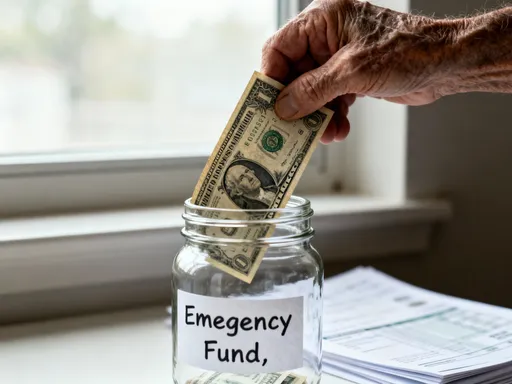
Cash is another critical component. Many investors see cash as “dead money” that earns nothing. But in volatile times, cash is optionality. It gives you the power to act when others are forced to sell. I always keep a portion of my portfolio in cash or short-term bonds—enough to cover 3–5 years of living expenses in retirement. This buffer allows me to ignore short-term market swings and focus on long-term fundamentals. It also gives me the ability to buy quality assets when they go on sale.
Tactical rebalancing is how I tie it all together. Instead of rebalancing on a fixed schedule, I do it in response to market shifts. If stocks surge and become a larger part of my portfolio, I sell some to lock in gains and buy undervalued assets. If bonds outperform during a downturn, I may shift back into equities. This keeps my risk level consistent and forces me to “buy low, sell high” in practice, not just in theory.
The Real Payoff: How Forecasting Accelerated My Retirement Readiness
The true benefit of forecasting isn’t just financial—it’s psychological. Knowing I had a framework to understand market movements gave me confidence. I no longer panicked when the news screamed “crash!” I had already considered the possibility, stress-tested my portfolio, and made adjustments. That peace of mind was priceless. It allowed me to make rational decisions when others were emotional, and that made all the difference.
By avoiding major drawdowns, I preserved capital that continued to compound. I didn’t need to chase returns after a crash because I hadn’t lost as much in the first place. That meant my portfolio recovered faster, and I reached my retirement number years earlier than projected. I didn’t get there by taking huge risks—I got there by avoiding unnecessary ones.
The numbers speak for themselves, though I won’t claim exact percentages or returns. What I will say is that the combination of disciplined saving, strategic allocation, and informed forecasting allowed me to retire at 57, with a portfolio that supports my lifestyle without constant monitoring or anxiety. I didn’t need to work longer or save more—I just needed to be smarter about protecting what I had.
More than the financial outcome, I gained freedom. Freedom from fear. Freedom from the news cycle. Freedom to focus on what matters. That’s the real payoff of market foresight: not just retiring early, but retiring well.
Staying Ahead: Continuous Learning and Adapting Beyond the Early Exit
Retiring early doesn’t mean stopping learning. Markets evolve. New risks emerge. Economic models change. What worked in the 2000s may not work in the 2030s. That’s why I treat forecasting as a lifelong practice, not a one-time skill. I still review economic data, track market indicators, and adjust my portfolio as needed. I read, I reflect, and I stay curious.
I’ve also learned to avoid complacency. It’s easy to think “I’ve made it” and stop paying attention. But financial security isn’t a finish line—it’s a moving target. Inflation, healthcare costs, and unexpected expenses can erode purchasing power over time. By staying engaged, I can adapt my withdrawal strategy, shift allocations, and ensure my money lasts as long as I do.
I also share what I’ve learned with family and friends. Not to give advice, but to encourage thoughtful financial habits. I’ve seen how fear and misinformation can lead to poor decisions. A simple conversation about diversification or the danger of panic-selling has helped others avoid costly mistakes. That sense of contribution adds meaning to my retirement.
Looking back, I’m grateful for the mistakes I made. They taught me more than any success ever could. Forecasting isn’t about being perfect. It’s about being prepared. It’s about turning uncertainty into strategy, fear into focus, and hard work into lasting freedom. If you’re dreaming of early retirement, don’t just save more—learn to see what’s coming. Your future self will thank you.